Choosing Living Room Furniture, Living Room Layout

A simple guide to creating a more comfortable home with sensory-friendly interior choices, wellbeing-focused design, and thoughtful room layout
When people think about a living room, they usually think about the sofa first.
What colour should it be?How big should it be?Will it match the rest of the room?
But one of the most important questions is often much simpler:
How do you want the room to feel?
Because choosing seating is not just about filling a space. It is about deciding how people will sit, relax, talk, read, rest, or spend time together in that room.
And that can completely change the feel of a home.
Why seating matters so much
A living room can look beautiful and still not feel comfortable.
Sometimes the sofa is too deep, so no one sits properly. Sometimes every seat in the room feels the same, even though people use the room in very different ways. Sometimes the room looks good in photos, but in real life it does not feel easy to settle into.
The right seating can make a room feel calm, welcoming, and easy to use. The wrong seating can make it feel awkward, stiff, or less inviting, even if everything looks stylish.

Different moods need different kinds of seating
Most people do not want the same kind of seat all the time.
At the end of a long day, someone may want a deep sofa they can sink into. In the morning, they may prefer a more supportive chair for coffee or reading. A child may want a softer corner to curl up in. Someone else may feel more comfortable in a chair that feels a little more upright and structured.
That is why one type of seating is not always enough.
A comfortable living room often works better when it offers a little variety.
For example:
a large sofa for relaxing
an armchair for reading or quiet time
a smaller chair that feels more open and social
a soft corner seat or footstool for flexible use
This does not mean a room needs to be full of furniture. It just means that different seating options can support different moods and different ways of using the space.
Why this is also a sensory issue
Seating is not only about style. It is also about how the body feels in a room.
Some seats feel soft and calming. Some feel firm and supportive. Some feel open, while others feel more enclosed and private.
Those details matter.
They affect posture, pressure, movement, personal space, and even how alert or settled a person feels.
For example, a deep soft sofa may feel cosy and low-pressure for one person, but for someone else it may feel hard to get out of or too unstructured. A firmer chair may help one person feel focused and grounded, while another person may find it too rigid.
This is why seating is part of sensory-friendly interior design.
A room feels better when it does not force everyone into the same experience.

Why seating choice can change the mood of a room
Furniture does more than fill a layout. It helps set the tone of the room.
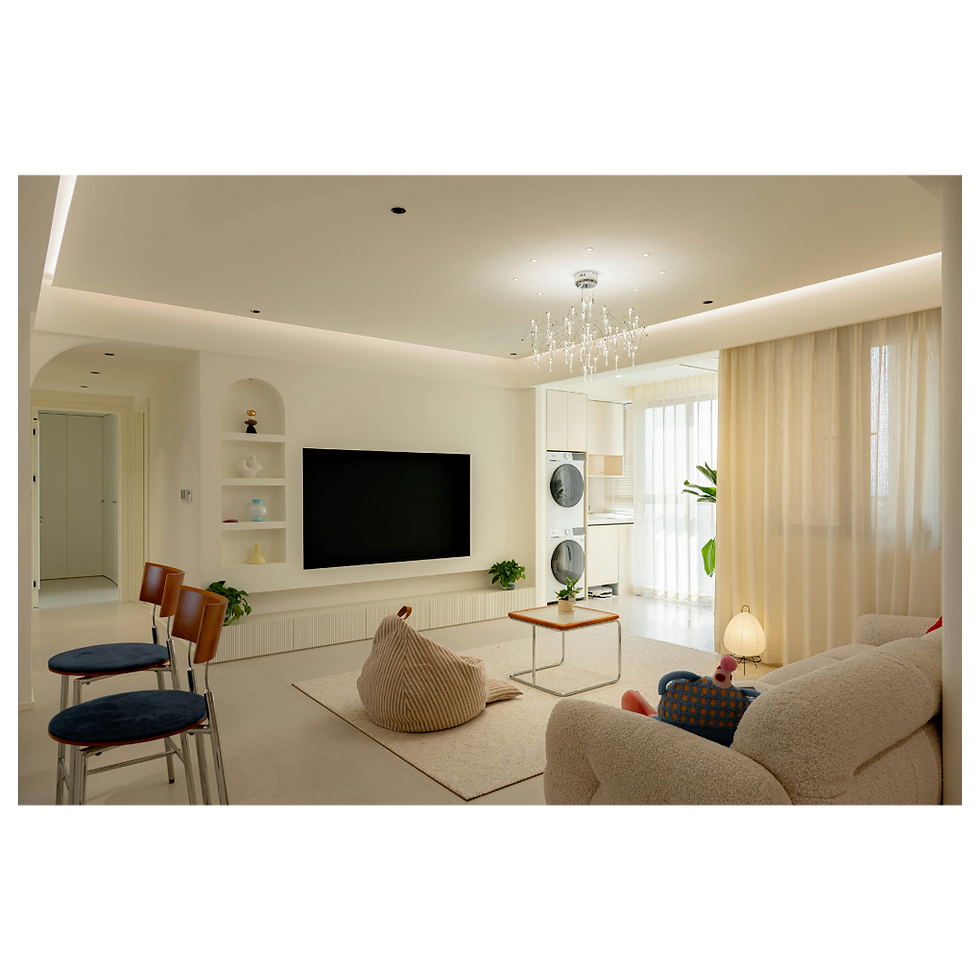
A room with one large sofa and nothing else may feel simple, but it can also feel limited. A room with a sofa, an armchair, and one softer flexible seat often feels more relaxed and more usable.
Why? Because it gives people choice.
Some days people want to feel tucked in and quiet. Some days they want to sit upright and chat. Some moments are social. Some are restful. A living room usually has to support all of that.
That is why intentional design matters. Good living room seating is not only about what looks good together. It is about what helps the room work better in real life.
Think about how the room is really used
A lot of people choose living room seating based on appearance alone.
But it helps to ask a few practical questions first:
Do you mostly use the room to relax, talk, read, or watch TV?
Do you like a room to feel cosy and enclosed, or more open and airy?
Do you need one main sofa, or would a mix of seating work better?
Do different people in the home prefer different kinds of support?
Does the room need to feel social, calm, flexible, or all three?
These questions make it much easier to choose seating that actually suits the room.
For example, if the living room is mostly for winding down, softer and deeper seating may work well. If it is also used for conversation, adding a chair that faces inward can help the room feel more connected. If someone in the home gets overwhelmed easily, a seat that feels a little more contained or separate may feel more comfortable.

A more comfortable home starts with better choices
A comfortable home is not always the one with the most expensive furniture or the most polished look.
Often, it is the one that feels easiest to live in.
That is why living room seating matters so much. It affects comfort, mood, flexibility, and how supported people feel in the space.
When seating is chosen well, the room feels more natural.More welcoming. More useful. More human.
And that is often what makes a house feel like home.

Comments