Small apartment storage ideas: give each activity a destination

Updated: Nov 17
Small-apartment storage can follow activities rather than leftover gaps. Give the things used together a destination that makes sense in daily life.
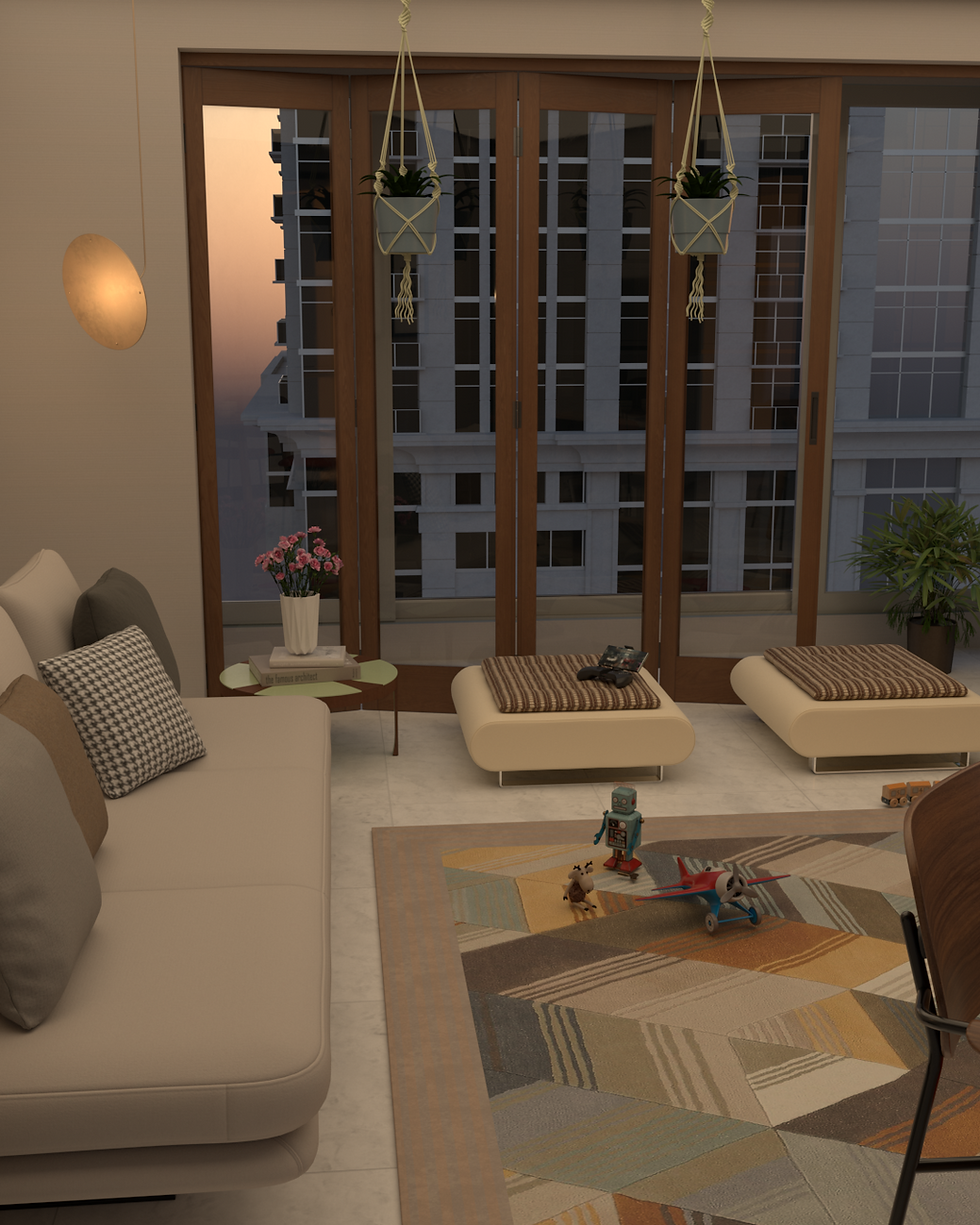
Allanberry Rooms design visualisation — Family Living Room. The seating is arranged around spending time together.
See this design in our project portfolio.
Start with the activities that spread through the home, then decide which items need to stay close and which can live elsewhere.

Allanberry Rooms apartment design proposal.
Follow the objects that never seem to settle
Choose one recurring pile: paperwork, craft tools, chargers or things waiting to leave the house. Ask where it comes from and what happens next.
A larger box may hide the pile without solving its journey.
Give items in use a different place from items waiting for a decision. An outgoing bag by the door has a different purpose from a long-term archive in a cupboard.
Choose containers after the categories
Group belongings according to how you look for them. A person who thinks in projects may prefer one container per activity, while another prefers tools separated by type.
Try existing boxes before buying matching storage. Check that labels can be seen and that the container is easy for its intended user to open and return.
A shared-table example
Imagine a dining table used for meals, paperwork and crafts. A small active tray holds today's task, a nearby cupboard stores supplies and one folder holds documents awaiting action.
Each activity can pause without occupying the whole table. The example depends on real quantities; it is not a claim that every collection should fit into one small box.
Review access, not just capacity
Can the item be reached without moving several other things?
Is there room to open the door or drawer?
Does the storage fit the user's actual way of searching?
Where does an unfinished activity go?
Choose and install furniture according to its instructions, including any required fixing. Capacity, stability and access matter alongside appearance.
For a particular activity, continue with small-space craft planning or toy storage that supports everyday play.
A useful storage system is one people can repeat, rather than one that looks organised only immediately after a tidy.


Comments