Task lighting for sewing: compare the needle, the fabric and your hand shadow

Updated: Nov 17
Sewing asks you to follow a needle, a seam and the edge of a fabric at once. Place the light around that working view, including the shadow of your own hand.
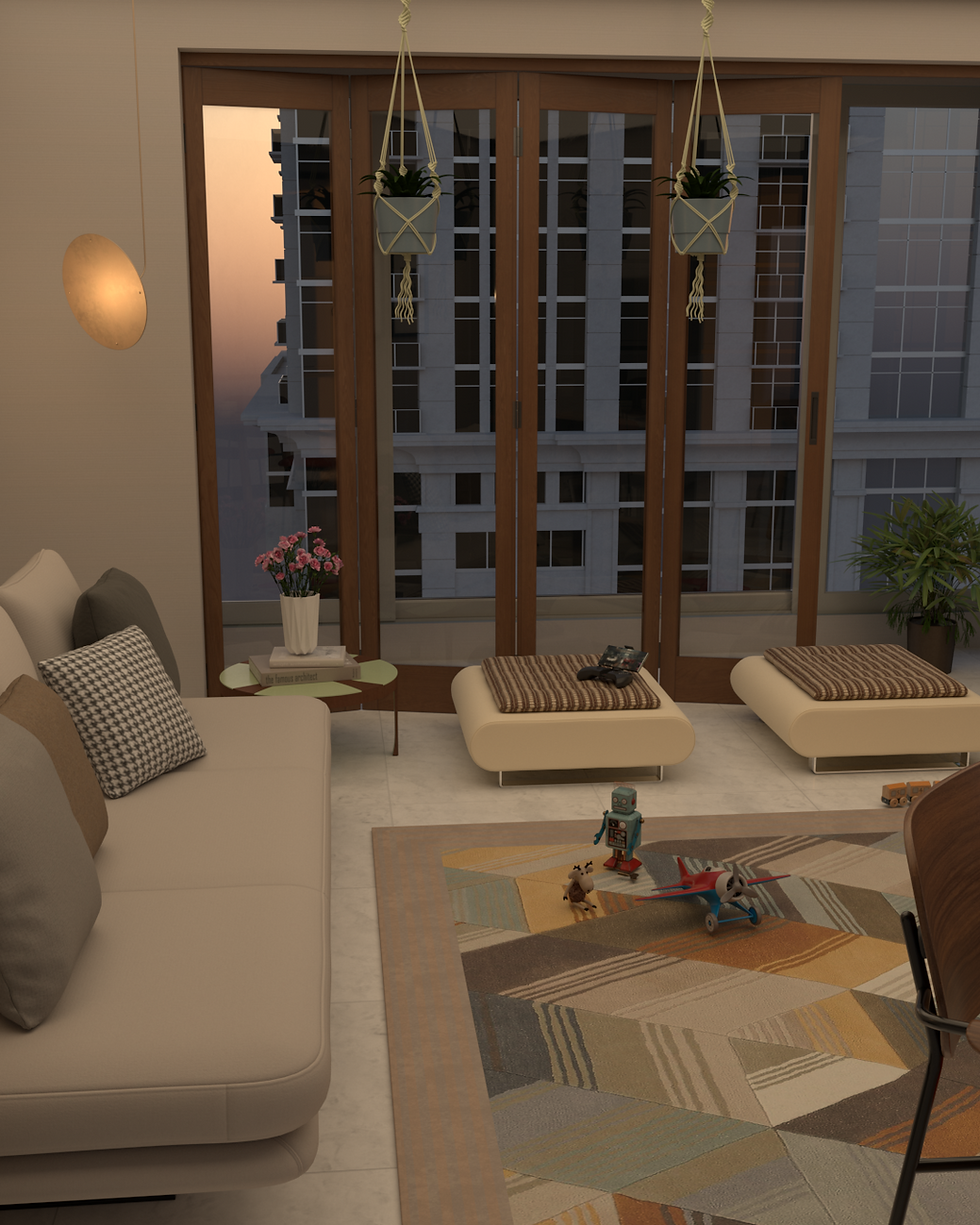
Allanberry Rooms design visualisation — Family Living Room. The seating is arranged around spending time together.
See this design in our project portfolio.
Use the material you normally work with
Place a familiar seam, thread and fabric at the machine or hand-sewing position. A white sheet is a poor substitute if most projects use dark fabric or shiny thread.
Mark the places you need to see: the needle area, seam allowance, cutting marks or an instruction sheet. Those areas may need different light directions.
Compare two directions with the same task
First inspect the work with the machine safely stopped. Position a suitable demonstration lamp on one side and then the other, keeping the fabric and seat unchanged.
Note where the hand shadow falls and whether a bright source or reflection enters the view.
The CCOHS lighting survey recommends checking shadows and reflected glare at the actual task. Choose the position that helps you see the seam rather than simply increasing the whole room's brightness.
Check the rest of the work area
Look from the seam to the instructions and the supply tray. If one area is much darker, compare a useful level of room light with the local lamp.
Keep controls within reach without putting a cable across the work or walking route.
Use only fittings and mounting arrangements suitable for the machine and table.
Keep heat, moving parts and the machine manufacturer's instructions in the installation review; a clip-on lamp is not automatically suitable for every position.
Keep the successful setup repeatable
Note the lamp position, fabric type and preferred setting so the space can be reset after another activity. Compare again when the main material changes.
Allanberry Rooms can incorporate that task test into a room-design brief. Share the sewing setup, typical fabric and the shadow or reflection that currently interrupts the activity.


Comments