Sensory-friendly dining: compare the table experience before changing the menu

Updated: Nov 17
A meal out begins with finding a comfortable place to sit. Sensory-friendly dining includes the table, nearby movement and sound, alongside the food.
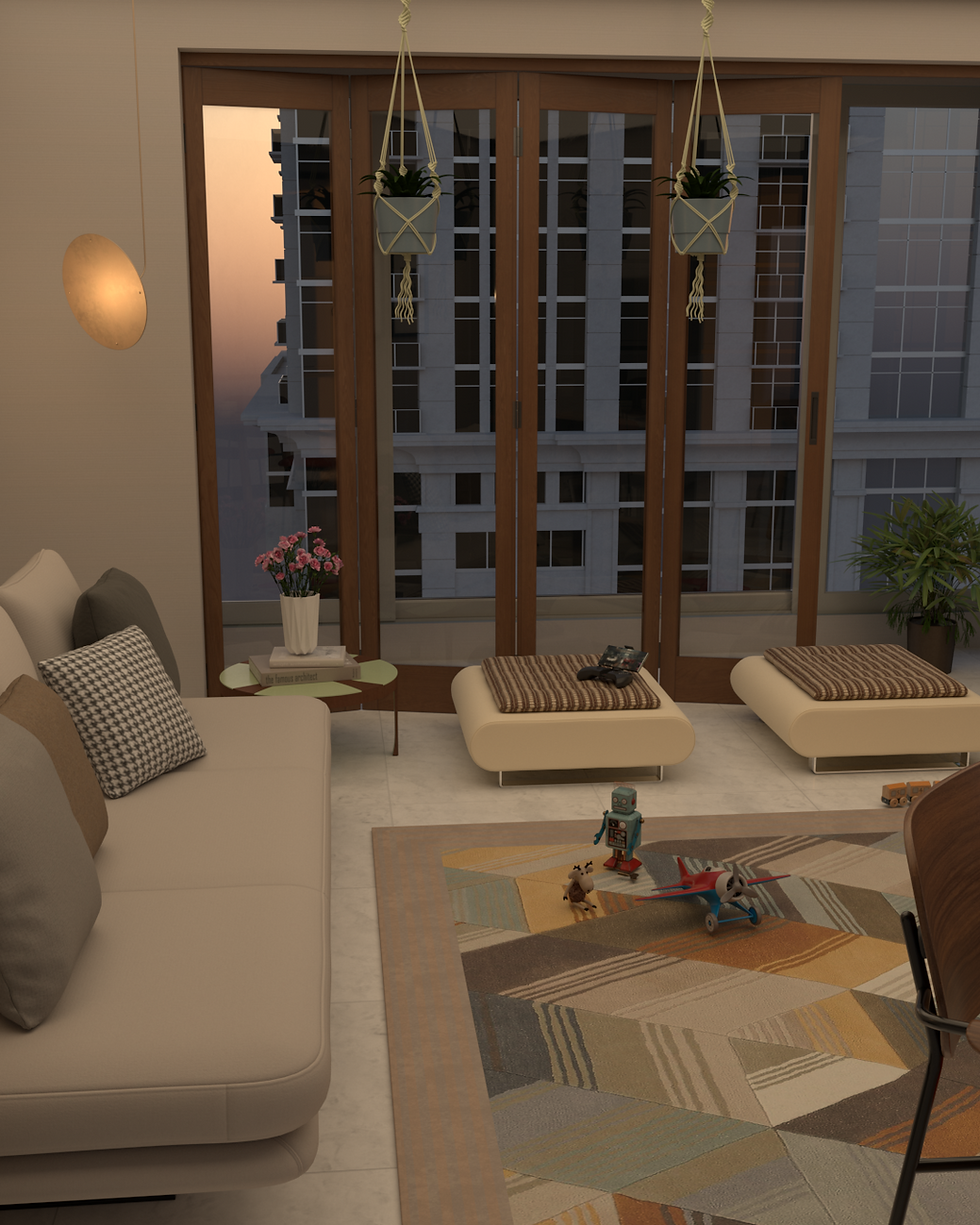
Allanberry Rooms design visualisation — Family Living Room. The seating is arranged around spending time together.
See this design in our project portfolio.
Begin with the chair, the view across the table and the sounds around a meal, while leaving food-related needs to the person and any relevant care advice.
Ask about a particular moment
Is the difficult part the kitchen clatter behind a seat, light reflected in a plate or people brushing past while someone eats? Write down that moment before replacing the table.
Avoid assigning a universal preferred seat. One person may want to see the room and another may prefer a less busy view.
Offer the choice without turning it into a public explanation of their needs.
Compare one seat and one sound change
First compare two seats using the same ordinary meal. Keep the serving arrangement and background sound unchanged.
Next, if agreed, compare the preferred seat with an unnecessary television or music source switched off.
The GSA acoustic guidance separates sound absorption, blocking and masking.
In a home, moving the source or changing when a noisy task happens may be a more useful first comparison than adding soft furnishings and expecting sound isolation.
Keep serving and leaving easy
Check that each person can reach water, pass a dish and get up without another diner moving.
A placemat may change the contact sound of a plate, but compare its cleanability, grip and feel before adopting it.
Use a short check-in after a meal: easier, unchanged or harder, followed by the reason.
Do not score how long someone stayed at the table as the sole measure of success or pressure them to remain for the trial.
Make the preference part of the layout
Allanberry Rooms' shared-home design work starts with activities and how people experience them.
A dining brief can name a preferred view and a troublesome sound instead of requesting a generic sensory style.

Allanberry Rooms home design visualisation. An example of activity and route planning, not measured performance of the equipment or material discussed.
For a room-design enquiry, share the table layout and the moment at meals you want the room to support better.


Comments