Hobby room ideas: choose a setup for the activity you actually do

Updated: Nov 17
A hobby room should invite the activity you actually enjoy doing. The useful setup begins with a real project, rather than a room full of supplies.
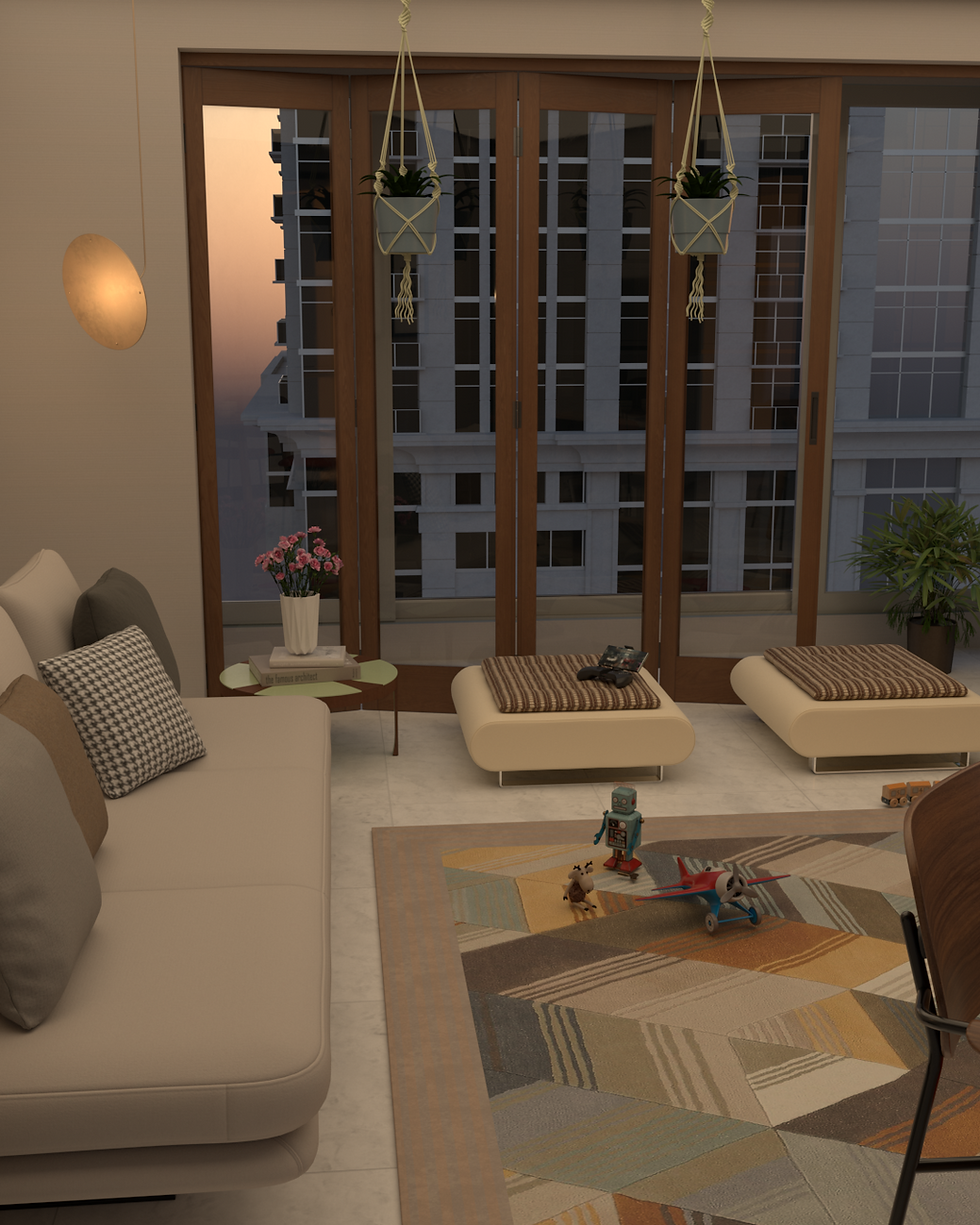
Allanberry Rooms design visualisation — Family Living Room. The seating is arranged around spending time together.
See this design in our project portfolio.
Look for your main action and what must remain ready between sessions before choosing furniture.

Allanberry Rooms reading-and-rest corner design proposal.
Begin with the object in your hands
For a puzzle or model, identify the largest work in progress and the loose components beside it. For sewing, include the movement of fabric, not only the machine's footprint.
Drawing and scrapbooking need a working surface and somewhere appropriate for unfinished pages. A collection of board games needs a finding system as well as shelving.
Compare permanent and temporary arrangements
A permanent setup can keep work available, but occupies the room between sessions. A portable kit can share an existing table if it has an appropriate destination when the table changes use.
Try the whole sequence: take out, work, pause and return. Note the step that repeatedly interrupts you instead of assuming every difficulty comes from insufficient storage.
Some activities need open space
Yoga and other instructed movement require an area appropriate to the practice, not a desk with a different label.
Meditation might use an existing supported seat, depending on individual preferences and instruction.
For planting, include care and cleanup alongside the display.
Specialist tools, materials, installation and health questions require their relevant guidance; a hobby-room aesthetic cannot establish those conditions.
Choose one trial for this week
For example, assemble a sketching kit in one folder or lay out a puzzle with its sorting trays. Compare that complete activity with the available room before buying new furniture.
Use the focused guides below to work through the next decision. You can keep the arrangement modest if it already makes the activity easier to begin and return to.
Choose a focused guide
Related decisions for your space
If these choices need to work together in one room, explore the Allanberry room design service.
You can also view the portfolio to see how room proposals combine everyday activities and personal preferences.


Comments