When the doorbell feels too loud from the seat you use

Updated: 7 days ago
A doorbell announces someone at the entrance, but it is experienced throughout the home. Notice where its sound becomes difficult to live with.
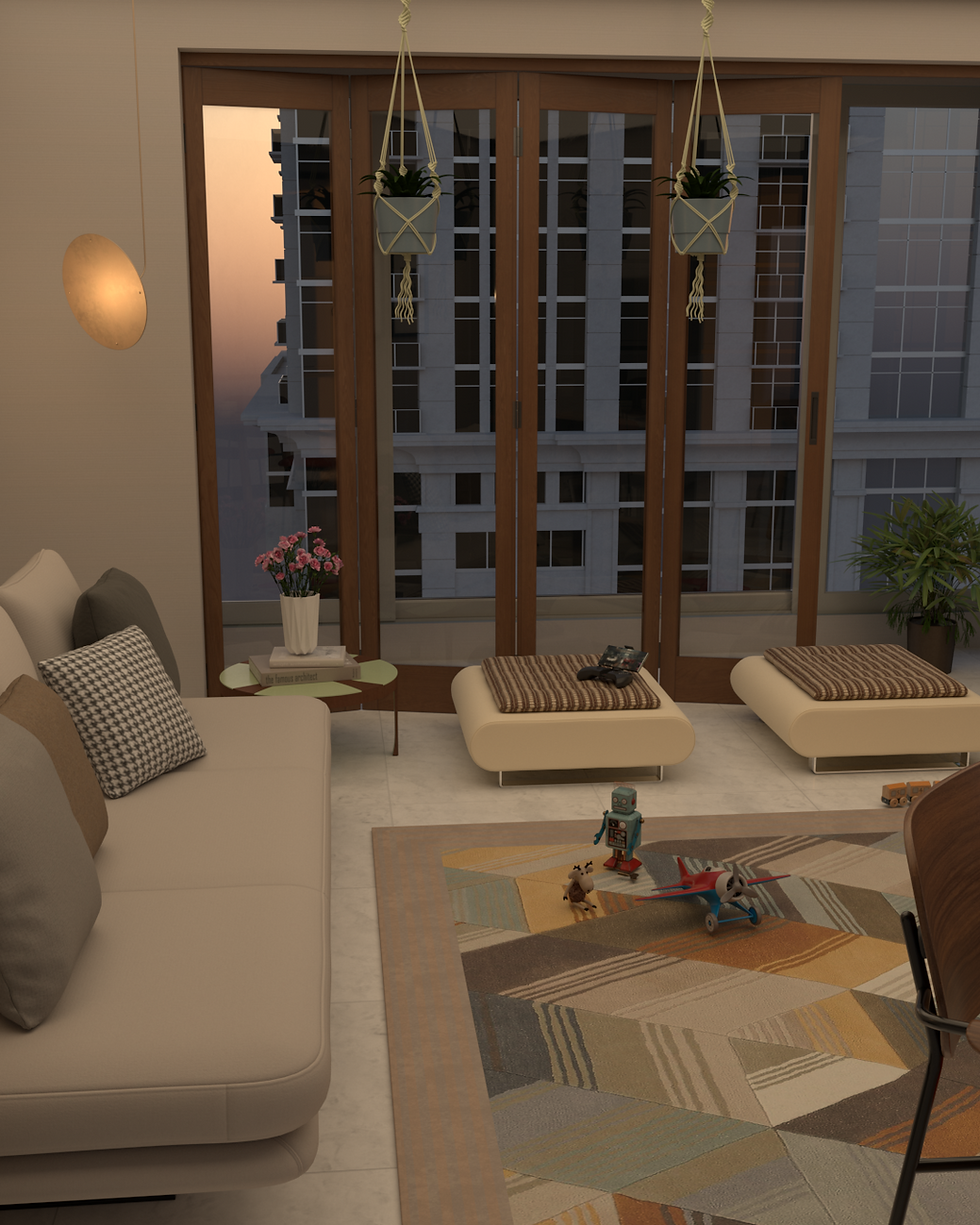
Allanberry Rooms design visualisation — Family Living Room. The seating is arranged around spending time together.
See this design in our project portfolio.
Hear the same ring from two places
With another household member at the door, listen from the closest resting seat and the room where someone most often misses a visitor. Compare with the internal doors in their ordinary positions.
Write down where the sound is too sharp, where it is easy to hear and where a different cue would help. Include visitors who arrive while someone is on a call or asleep.
Illustrative chime plan. Compare the same ring close to the source and in the room where it is often missed.
Try one change with the people who rely on it
If the manufacturer provides a volume or pause control, compare settings using the same ring and positions.
For example, the Google Nest doorbell guide explains how Quiet Time changes the indoor chime on supported devices.
If one person needs a quieter seat and another needs the alert, consider where a compatible visual or personal notification could be noticed.
Agree on which person responds and test with a planned visitor. Check your own model and installation conditions.
Place the alert on the arrival plan
Allanberry Rooms’ officetel proposal separates arrival and retreat within a compact home. Include where a person first hears the doorbell in the plan.
Send the room design team the chime position and the seats where it feels strongest or gets missed. We can compare seating and alert positions alongside the entry route.


Comments