Bouclé sofa pros and cons: compare the texture in your own routine

Updated: Nov 17
Bouclé has a distinctive look, but your hand and daily routine meet its texture too. Try the actual upholstery before deciding it belongs on your sofa.
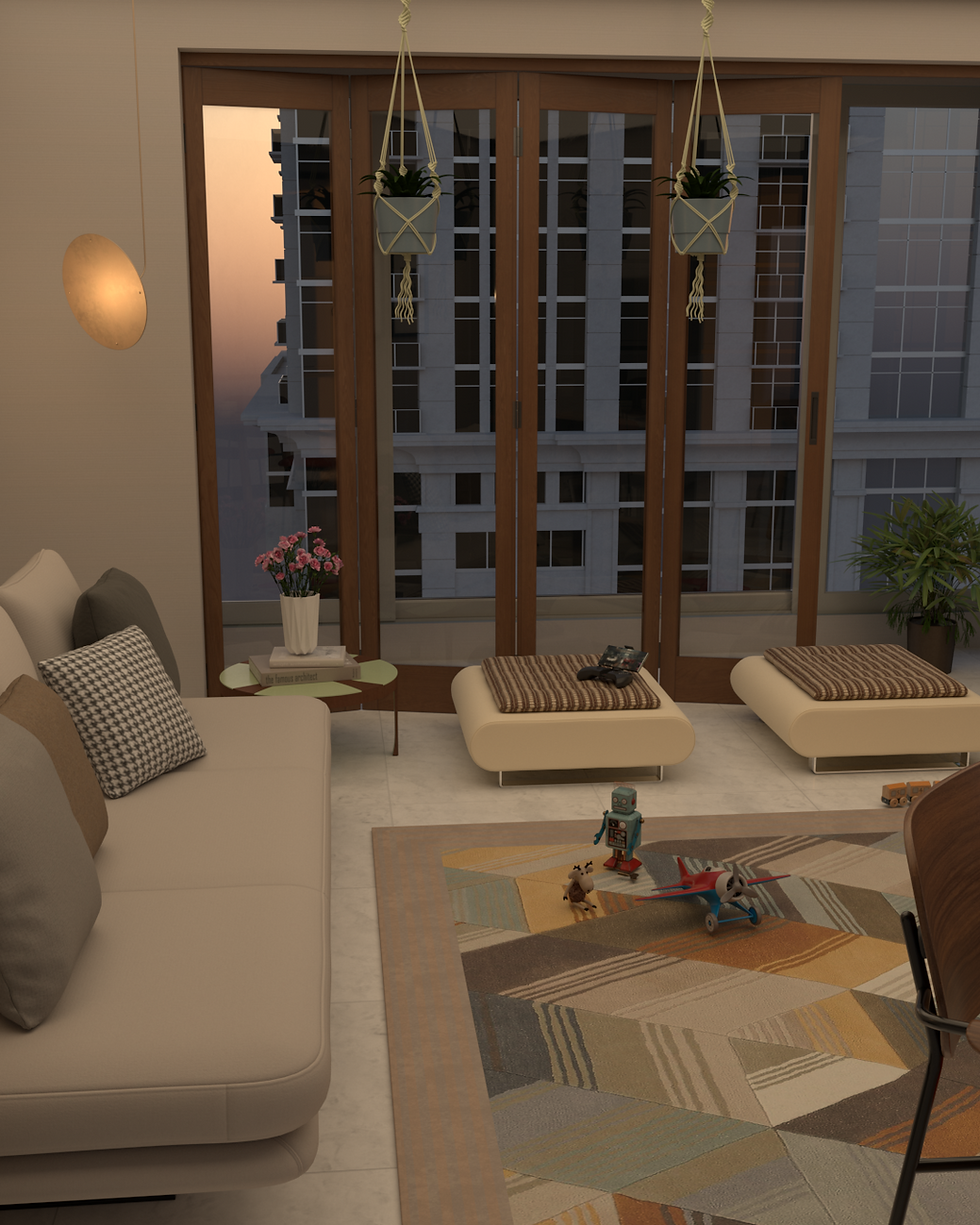
Allanberry Rooms design visualisation — Family Living Room. The seating is arranged around spending time together.
See this design in our project portfolio.
Test how it feels, what it catches and how the maker says it should be maintained.
What does bouclé describe?
Bouclé refers to a looped or curled yarn effect used to create texture. It is not a single fibre composition.
For example, Kvadrat's Acca textile description identifies a particular looped yarn and fibre combination; other bouclé fabrics can have different specifications.
Ask for the fabric name and composition of the actual sofa. A photograph of a cream surface does not tell you how it feels against clothing or whether the cover can be removed and washed.
Test contact, not just appearance
Handle a generous sample and, where possible, sit on the upholstered product. Compare the feel at the forearm, behind the knees and against clothing you wear at home.
Someone may like the appearance but prefer a smoother contact surface.
A throw is an optional way to change contact, but test whether it stays where needed rather than treating it as a solution to a fabric you dislike.
Match care to everyday use
Ask how the specific textile should be vacuumed, spot-cleaned and professionally cleaned, and what the furniture warranty permits. A removable cover is not automatically a machine-washable cover.
If pets, textured clothing or frequently used accessories share the sofa, discuss snagging and wear with the supplier.
Do not assume that every looped fabric behaves identically or that a performance label answers every maintenance question.
Compare a real alternative
Place the bouclé sample beside a smoother woven fabric in the same room, during daylight and evening use. Compare touch, visual busyness and the maintenance commitment you are willing to make.
The advantage may be a texture you enjoy and want to see across a large area. The disadvantage may be unwanted contact or care requirements.
Neither answer is universal; select the actual material around the people and activities it will support.


Comments